Episode 8:
PENNE ALLA VODKA
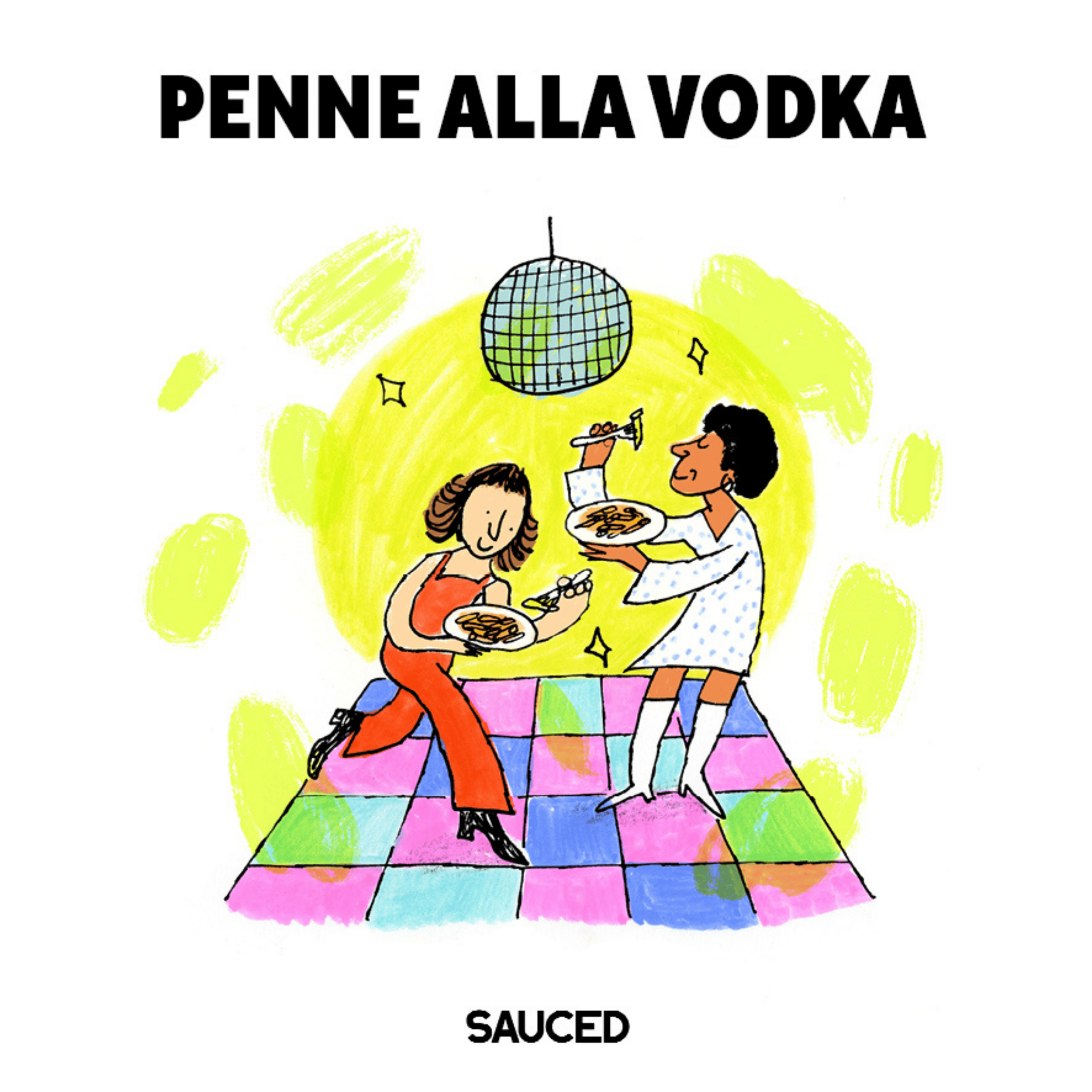
A 1974 Italian cookbook, a Bologna nightclub, and a dish that earned the nickname "disco pasta." Penne alla vodka has no codified recipe — and was once called "disgusting" by the president of the Italian Academy of Cuisine. This week, we're tracing it from Italy to Italian America and making our own version along the way.
"If you eat it, it becomes authentic."
What we settled on:
Vodka is the non-negotiable — extracts flavor compounds from tomatoes that water and fat can't
San Marzano DOP crushed tomatoes plus a touch of paste
Calabrian chili, shallots, garlic sliced thin
Heavy cream, simmered gently for 3 minutes on low
Penne rigate — the ridges hold sauce perfectly
Pecorino Romano and cold butter for the finish, stirred in off heat
The cocktail:
The Disco MiTo: Vodka, Campari, Cocchi di Torino, orange bitters, lemon peel. Stirred, strained into a Nick & Nora. A vodka riff on the Negroni.
RECIPE CARD:
Premium subscriber? Check out the full recipe card here.
LISTEN
EpiSOde Partners
Thanks to the following brands for partnering with Sauced to bring you this episode:
TRANSCRIPT
Tim McKirdy: Sother — hope you got your disco dancing shoes on today.
Sother Teague: Disco dancing. Well, let's go dancing.
TM: It's the disco pasta episode. Of course.
ST: Disco pasta. Now, if you said disco to me in reference to food, my assumption is gravy. For some reason, disco fries get topped with gravy.
TM: We are doing pasta and gravy in the Italian American sense. The disco we'll get into when it comes to the origins. That's just a little sneak peek there for folks. In the meantime though, I'm really curious to hear your personal and or professional connection to this dish.
ST: Penne alla vodka. My personal and professional connection to the dish is none. I don't believe I've ever made this dish, and I also think I've never tried it. I've never been compelled to order it out and about. In fact, I'm having a hard time. I know we live here in New York where pasta dishes are everywhere. I even see this when I go to my local pizza shop. They'll have penne alla vodka pizza, which has the actual penne on the pizza, which is a little bit mind numbing for me, but okay. I've never pulled that one either. Also, my pizza place, I don't think they're using vodka. They don't have any there. But you know, I get it. It's a pink sauce. It's often also just called pink sauce. Right. But so anyway, that's a long way, long answer to say: pretty sure not only have I never made it, I've never had it.
TM: Well, confession alert for myself here too. I've never made it, so I don't know if we just wrap up and call it a day there.
ST: No, no, no.
TM: I'm joking.
ST: That's not our ethos.
TM: Not our ethos. We're gonna dig in and demystify for the listener and for ourselves.
TM: One of the things that I have found really fascinating about this dish is there's some real fun science behind this that I think is applicable to other stuff, and also completely non-applicable to a certain aspect of this show. So we'll get into that. And I really found that interesting. But I remember the first time I became aware of vodka sauce's existence. I had recently moved to the US. I was having dinner at a friend's house outside of the city. And they were making vodka sauce. They were making tomato sauce, and someone went into the cupboard and pulled out a handle of vodka. And I thought, that's very strange, because these folks barely drink and here's a half empty handle of vodka. And as it transpired, this was the vodka for the vodka sauce. And I just thought: this is a scam. What are you doing? This is the most weird American thing I've ever heard of. Why are you putting vodka in pasta sauce?
ST: Right. I mean, listen, and I know through our research for this episode, we both discovered some things about booze in food, which is what we're all about. That maybe we didn't realize or know. But at first blush, my instinct is to think: you know, vodka is water with consequences. And if I'm going to put that spirit up against some heat, I'm gonna lose some of the consequences. So what have I got left? Just water. And we discovered together where the science comes into play that makes this a worthwhile ingredient to put in your pasta.
But before we get to that, I kind of made myself not dig into the history of this drink because I wanted you to get into that aspect of it. So talk us through the history of penne alla vodka. A traditional hundreds of years old Italian dish, I'm sure.
TM: Well, I think the great question about this dish is: is it Italian? Is it Italian American, or is it American Italian? And those three things are distinct.
TM: In my opinion, and as it transpires, the history does begin in Italy.
ST: Oh, this is a huge shock to me. I absolutely thought this was definitely made here.
TM: So obviously, as with drinks and as with dishes, there are many competing origin stories. There are half a dozen people who claim to have invented this dish. Which is quite crazy. But the name, if you have to know one name, we're going all the way back to 1974. Ugo. Ugo Hugo. He published—and now I'm gonna need to properly read from my notes here because Italian is not a language I speak—a book named after his film, L'Abbuffata. So Ugo was an Italian actor. The buffoon is what it means. The Grand Buffoon would be the movie. I'm guessing or surmising here is the tale of the buffoon. His book, which he published in 1974, contains a recipe called Pasta Furiata. So like a sort of pasta, a furious pasta.
ST: Yeah. The infuriated, the angry. So almost like arrabbiata.
TM: Exactly. Exactly like arrabbiata. And that contained penne, fresh tomatoes, a shot of vodka, chili, garlic, and bay leaves. But he did sort of give a top tip. If you were using Polish vodka that had been infused with chili, you can skip the fresh chili. So this was a way of adding heat, perhaps. Maybe it was through that sort of spicy vodka in the beginning. This is the earliest documented vodka pasta that was published in a cookbook.
ST: And that's not that long ago. This is 1970-something.
TM: 1974.
ST: That's not that long ago. I was five years old.
TM: You can do the math, folks, or the maths if you're British. Around the same time, also in Italy, a little place called Dante in Bologna. Bologna being the home of the ragu. You know Bologna?
ST: They're learning so much about language. It's also the home of Mortadella, which is the mother of Bologna.
TM: Dante was a nightclub in Bologna in the late 1970s, and they would serve up penne alla vodka, or vodka pasta with tomato sauce for late night revelers, club goers. Hence it earned itself the nickname Disco pasta.
ST: Okay, well that makes sense. If it's a club, we've got all the booze on hand. Can we think this is chucked right up there with the chicken soup at the end of service at Employees Only? Maybe they're just passing it out for free at the end to say: it's time for you to go.
ST: Right. That makes sense. And it's a club, so they're gonna say, well, we'll put some booze in here. And what booze are they gonna put in there? The cheapest, most plentiful one.
TM: I'm gonna stop you there.
TM: 1970s. Vodka, very much à la mode, very much a status thing at the time, especially if you are in Italy. A country that on the one hand is celebrated for its traditions and traditional ingredients. And on the other hand, if you're the youth, I don't wanna be having Amari, Campari like my grandfather had. I want vodka.
ST: Yeah, I understand this. My travels throughout the world show me over and over again a shock, which is: Americans drink American whiskey, but if you're in France, no one's drinking Cognac. Right. If you're in Italy, the kids aren't drinking Amari. That's the old person's drink. You know, my grandfather drinks Amari. But in America we're like, we can't get enough Amari. But also we drink our own thing. American whiskey.
ST: But other countries it seems don't drink the thing that they produce because they consider that my grandpa's stuff.
TM: Yeah, this is true. But I think also, around this same time as well, like as Americans were embracing vodka, late sixties, early seventies, it was in response to not wanting to drink what their parents drank or their grandparents drank, which would have been American whiskey at the time. Sure. Everything is cyclical, right, when it comes to trends. I want to throw one or two very short counterclaims in here.
TM: 1967, a chef called Armando May, who ran the Fontana di Trevi restaurant here in New York City. Right. The Trevi Fountain. Claimed that he debuted a vodka cream tomato pasta in 1967. So if that's true, it predates the book that we were talking about there. And then the other one, this is sort of a more general claim: there was a vodka brand and I couldn't find the name of the brand that was trying to make inroads in Italy at this time. And basically got some chefs on board to be like, this isn't just something you can drink, you can cook with this as well. And it was part of a bigger marketing campaign.
ST: Just trying to create some depletions — get some sales on the board.
TM: Depletion. Nice. Good technical word there. So yeah, those are the different theories and I would like to point folks to something that I very much enjoyed while doing some research for this. There is a short documentary, it's about 30 minutes long that tries to recreate that, that explores quite a few of those theories. It's called Disco Sauce, the True Story of Penne alla Vodka. It came out in 2023. It's available on YouTube and it's a fun one. Like I said, they try and recreate all these different things that we're gonna go through now. But yeah. Much debated origins, but surprisingly, again, more solid when it comes to names and dates and things than I was expecting to experience here.
ST: Sure. I think there are some leads. It seems to get back to where it came from. I think the problem with this dish is what I saw over and over again in my digging around: there seems to be no codified recipe. Not only in amounts like a recipe recipe, but even in what's in the dish.
TM: Yes.
ST: Even coming all the way down to people argue over whether or not it has penne.
TM: Yes. And there's some really interesting debates. And I think that might have to do with a certain, larger than small food group that's out there. We'll see.
TM: Question for you though.
ST: Yeah, buddy.
TM: Thought experiment: This dish is now seen as old hat kitschy, kind of like blazers with shoulder pads in Italy right now, right? Like, and someone might tell me, look, those are back in fashion because everything is cyclical, right? But this is seen as like from the seventies, like a large mobile phone or whatever. You know what I'm on about? Why is it not the case here? Why has this persisted in American culture and specifically Italian American or American Italian culture here? Like, why do you think that has gone from strength to strength here and you have billion dollar sauce brands and over there it's just like, yeah, we don't do this anymore.
ST: Yeah. I think that's the American fascination with, well, with what we're doing, cooking with booze. Also vodka is the undisputed dominant king of booze sales here in the United States. So I think that's just, it's in people's pantries. There's a convenience aspect, and then there's also this like: I cooked it with booze aspect too, you know? Which is like, it's on hand, but it's also cool.
ST: Also I think that there is at least a sliver of the zeitgeist that it's gotten a hold of, because there was a skit from Saturday Night Live. About penne alla vodka? Did you see this skit? I didn't clock what year it was, but it wasn't the current year. The whole skit was about a minute and a half long. And it was just all these scenes of people, like for when you graduate college, for when you're at a funeral, for when you're at a wedding, for what's always there for you. And it cuts away to the catering table and it shows a metal chafing dish filled with penne alla vodka. Right. It's just always in our periphery. It's not that bad. It's not that good, but it's always here.
TM: Right. And I think that skit would not land in Italy now. Right. You know what I mean?
ST: Understood. Yeah.
TM: Like doesn't have that. So I find that fascinating and I think that maybe speaks to the differences between, what some folks in the wine world or whatever call Old World and new world. The differences between European culture and American culture or whatnot. And what gets celebrated and what gets left behind. Therefore, prince or pauper.
ST: I'm gonna say this is a pauper dish. You know, it's got a rudimentary set of ingredients that are also still debated. The most expensive two ingredients in the whole thing are gonna be the vodka, which you can get pretty cheaply if you really try hard. And also the cheese, and you don't use a ton. So I think this is a pauper dish just based on the price tag.
TM: Yeah, I totally agree with you. Also, shelf staple ingredients too. Most of them are coming out of a can.
ST: I think this is a dish that can also, depending on your home pantry and what you kind of always keep on hand, this is one of those dishes that's like: I'm exhausted and exasperated. I've had a heck of a day at work or whatever, and I can come home and be like, I can bang this out in 20 minutes just based on what I have. I don't have to stop at the store. This is pretty much staple items that I can rely on in my fridge and pantry.
TM: Yeah. I think if you look at the ingredients alone, definitely a pauper's dish. If we want to incorporate some of that origin story into it, I would say it's like a yuppie pauper or a kind of aspirational pauper's dish. Right. You're drinking vodka, like a flavorless alcohol to seem cool and to seem of the moment. And so you're having disco pasta. You're out and about. Whether or not this one did make it into Saturday Night Fever, you know, it made Saturday Night Live. But we'll see. John Travolta certainly would have enjoyed it, I believe.
ST: Listen, penne alla vodka is staying alive.
TM: Alright, well those have been the origins and the prince or pauper debate. How about we hit up some luminaries?
ST: Well, Julia and Jacques had nothing to say. I dug around, flipped through some books that I have from both of them. Also consulted the internet and YouTube. Couldn't find a single mention of either of them. I don't know if you did. And then, not necessarily luminaries, but culinary folks that I enjoy. I saw that Babish has his version, and again, I'm gonna say version because there doesn't seem to be a hard and fast recipe. We're gonna make our sauce version throughout this show, but there doesn't seem to be a referenceable codified penne alla vodka recipe out there.
TM: Can I just say though, I agree with you. And we've said that for various different dishes to varying degrees.
ST: This one seemed more elusive to me. You know, even French onion soup, at least still had a pretty codified, and that was the loosest one. This one to me seems again so people are arguing over the pasta.
TM: Yeah. Well, I think the point that I was gonna make — I agree with everything you're saying. I think the point that I was gonna make though is more like when you look at cocktails and cocktail origins and cocktail recipes, you land on much more of a definition. Even if we don't know the origins, even if they're disputed. Right. A martini is a martini. We have our definition for it. Right. Gin, vermouth and opinions. A Negroni, whatever. Right. Gin, sweet vermouth, Campari. Campari has to. Cocktails are much more defined. There's less wiggle room, and there might be more when it comes to origin stories. But I think cocktails are much more defined. Whereas it only seems natural to me that food would be a lot more open to interpretation and open to influence from many different factors.
ST: Regionality, location, geography. I get it. I get it. You're right. But this one seems to be, again, such a small list in the ingredients to have so many contentious viewpoints.
ST: Like if we use the Negroni as the example, sure we can battle over what gin, what sweet vermouth, but it's always Campari, right? So at least we got a third of the thing that's codified.
TM: But it's still gin and sweet vermouth.
TM: And then, and that is just the intersection of food and alcohol and also where they diverge. And I think that's fun.
ST: Anyway, to finish up, I saw Babish has his version out there. That was a good one. Joshua Weissman has his out there, which I thought was pretty interesting. And I wanna talk about his a little bit more as we get moving. He foregoes using chili flakes and instead incorporates gochujang when he uses his tomato paste.
TM: Nice.
ST: Which I thought was pretty brilliant, right? It really attacked my salivary glands. Just watching him do it. I thought that was a pretty wise move on Weissman's part. But beyond that, I couldn't really locate any of the folks that I regularly follow or watch or refer to when I'm looking for food information that had any opinion or anything to say at all about this particular dish. Oh, actually there was one that shocked me a little bit. I did happen to see Ina Garten, who's kind of a heavy hitter out there. But I only found one video from her and it looked kind of dry and not as glossy and shiny. When you say pasta, penne alla vodka, I think of this very shiny, bright emulsified sauce. And hers looked kind of rusty, red, dark, and kind of thick. And she didn't finish it in the way that I consider this dish should be finished, nor did she use penne. So again, even the ones that I consider heavier hitters or bigger luminaries, there's no consistency.
TM: And I would've thought this would've been perfect for the Barefoot Contessa given her proclivity for using store bought ingredients.
ST: Yeah. Right, right.
TM: I'm not mixing up my American Modern cooking icons there, right? That was the one that Ina Garten, the one who's like store-bought is fine in a pinch.
ST: Yeah. Yeah.
TM: Okay. Yeah. Just making sure there.
TM: Like yourself, I did not encounter Julia or Jacques. It did also get me to start thinking, okay, well I should expand or I should expand the field of who I'm looking for and who might be connected with this dish or this cuisine. So I went to see what Lydia Bastianich had to say about this. Thought that would be a good reference. In her Lydia's Italian American Kitchen book from 2001, she said, and if only to kind of corroborate our timeline, she said: I found myself making this innovative dish, which always charmed my customers quite a bit in the early 1970s. So it seems like it quickly made its way over to the US or it was happening in both places simultaneously. Interestingly, and to tie back to something I was saying earlier, Lydia calls it more an American Italian recipe than an Italian American one. And that distinction is apparently very important. I'm saying apparently in terms of, this is not my opinion, but I concur with it. American Italian equals Americans making Italian food. And Italian American equals Italian immigrants creating something new. Sure. And so that kind of makes sense, right? Like if this was born and raised in America, this is an Italian American dish. It's something else. It's something bigger. It's something more abstract.
ST: That's a great way to make a distinction between those two turns of phrase. And I think I was waiting for you to reveal the elephant in the room.
TM: In terms of, you know, princes, paupers. Are you even using penne? Are you even using vodka? Arguably the most famous and sought after version of this dish one can have is at Carbone.
ST: Yes.
TM: Where it's not called vodka and they don't even use vodka. It's called Spicy Rigatoni.
ST: Spicy rigatoni. Yes. And they.
TM: Thoughts on that? Have you ever had that spicy rigatoni, their version?
ST: Oh no. But they sell their pasta sauce in a jar and the pasta sauce for their penne alla vodka does have vodka in it, the one that you purchased at the store. But they are not shy about telling you that the one that they serve at the restaurant doesn't have vodka in it.
TM: So a quote from Mario Carbone here says, “we needed another vegetarian dish. I thought of penne alla vodka. The most bastardized of bastardized dishes. In a tongue in cheek moment, it sort of started to have a life of its own.”
ST: Hmm.
TM: I'm sure that no doubt what has contributed to this dish having a life of its own in the presence that it has is social media and the sort of influencers and whatnot. But yeah, no actual vodka in the dish. Not that they're saying it in the title, but just interesting that that most famous of versions.
ST: Which is not inexpensive either. They're not known for their low prices at Carbone.
TM: I think it's $32.
TM: Or probably was. I bet that price is well outdated now.
TM: One final one for you here today.
ST: Yeah. Hit me.
TM: To bring it back to Italy. Giovanni de' Volpi, President of the Italian Academy of Cuisine.
ST: Ooh.
TM: In 1983 in an interview called penne alla vodka a “disgusting dish.”
ST: Opinionated.
TM: That's coming from the president, guys, the president of Italian Academy of Cuisine, so not liking it there. And then further to the New York Times in the eighties described vodka sauce as tasting like an alcoholic Alfredo, an undefined mix of cream, cheese and liquor. So yeah, in summation: dismissed by Italian culinary establishment, beloved by Italian Americans, and increasingly by everyone else who gets to decide what's legitimate. The listeners do.
ST: Yeah. And it's our job to go into it with an open mind and an open stomach, and try and at least codify our version. Which we're about to do.
TM: Starting with our non-negotiables…
ST: Non-negotiables. Well, I'll start it off. Vodka.
TM: Yeah, I think we are in agreement there.
ST: Actually, I'm already gonna back off. Non-negotiable alcohol.
TM: Okay. Okay. Interested to see where you're gonna take that one. Especially given that the alcohol is named in the name. Okay. Then by your standard, therefore, I'm gonna say my non-negotiable is pasta.
ST: Okay. Yeah. Touché. Well done. Past that, I'm gonna say fat and I'm gonna say we're gonna need both. Oil and butter.
TM: Oil and butter. Okay. Then I'm gonna say tomatoes.
ST: Onions. I'm seeing your face in shock there but I think this dish should have onions.
TM: It's not a non-negotiable for me. If you put down a penne alla vodka in front of me, I might not immediately notice whether it did or did not have onions in the sauce.
ST: Fair enough. You are right. Okay, I'll take it off my non-negotiable list.
TM: Parmigiano Reggiano, we'll say.
ST: Cheese.
TM: Italian style, hard cheese that you can grate.
ST: Cream.
TM: Cream. Really? The cream debate. Let's have it.
ST: You think there's a debate here? They all have cream in them. That's one of the threads I saw throughout everything I read and watched. Cream always. Well, actually, you know, Ina Garten didn't, but it was also the one that I looked at that looked the worst. I was like, that does not look emulsified. It doesn't look creamy. It doesn't look shiny.
TM: Look, if we're gonna bring it back to Ugo.
ST: The buffoon.
TM: Apparently the first didn't have it in there. No cream.
ST: All right.
TM: And again, I'm with you though on this stuff as well.
ST: You're just saying that's not a non-negotiable? The onions are gonna be emulsified or rather pureed into this dish. They are. Then I can say I can see not seeing an onion doesn't make it a non-negotiable because they may not be in there. But the cream is gonna be evident if it's in there or not.
TM: I suspect that this might be because, much like yourself, I've never made this dish. But I've seen it enough times. I could spot it from a mile, but I've not eaten it enough times. And also, if I am mentally walking down the aisle in the supermarket right now, there are plenty of vodka sauces that don't have cream in them or that aren't pink. But I only was mentioning the cream debate because it is one of the debated ingredients. Like despite, like you said, there not being a codified recipe for this, people agree it's vodka, it's tomato. There's different ways. Okay. It's penne or it's rigatoni. The debate generally is over whether you add cream or not. And I'm with you. Like otherwise, what makes this different from a marinara sauce with pasta?
ST: Right?
TM: So let's say cream is a non-negotiable. You've twisted my arm.
ST: And then I only have really — well, there's two left on my list. I gotta have some kind of spice. So chili flake of some kind. Yeah, chili of some kind. Okay.
TM: I agree.
ST: And then there's one that's pretty glaring that we've left out. We gotta have garlic. You think that's not a non-negotiable for this sauce?
TM: I'll give you it.
ST: Alright.
TM: In such a simple preparation, those ingredients will be amplified and will therefore be striking in their absence.
ST: Yeah.
TM: Like bay leaf in your crème brûlée.
ST: That's right.
TM: Alright, so non-negotiables. And I think that's it. I don't think there's anything too much to talk about cooking technique or whatever, so we can put a nice bow on that and we can say, despite what the rest of the world is doing, we are slowly codifying penne alla vodka. Now let's head into ingredients. In order of importance, what would you put before we get into them, what would you put at number one?
ST: In order of importance?
ST: Tomato.
TM: I agree with you.
TM: Tell me your thinking and then I'll tell you mine if it differs in any way.
ST: I think that the dominant flavor of this dish is tomato. It is a tomato sauce for sure. It's got other ingredients in it that make it greater than the sum of its parts. But the tomato flavor is where we're going. And if I had my druthers here, the tomato product would specifically be tomato paste. Almost predominantly, if not predominantly. I could make this dish with nothing but tomato paste, but I'm gonna say I'd also like some passata, which is the smooth puree of tomato from Italy that has no skins or seeds in it, to kind of help loosen it up. But I could make this dish with nothing but the paste.
TM: I will definitely go paste, but I'm only hitting it with a tablespoon or two.
ST: Oh, I could absolutely. You know, those tubes that it comes in with? Yeah, yeah. That we mentioned earlier. Looks like toothpaste. I could go with a whole tube.
TM: Which by the way, are so much less prevalent here. That's all I've ever encountered tomato paste than in the UK is the tubes.
ST: Well, even just now, when I defined what passata is, it's because I know that here in America that's hard to find. And it's strange. But you know, having, I know you're gonna make fun of me 'cause I've had every job there is. But when I was a young man, I worked in grocery and at every grocery store that I worked at, and certainly every grocery store that I go to, if you're looking for passata or its cousins, it's always gonna be on the top shelf in the tomato sauce aisle.
TM: And then it's a chicken and egg situation, isn't it?
ST: What do you mean by that?
TM: Well, are people not buying it because it's on the top shelf? Or is it on the top shelf because people aren't buying it?
ST: Oh, right. Yeah, yeah. Everything that's eye level in a grocery store, of course, is the thing they want you to buy. That's the thing they get the best margin on, et cetera. Anything above or below that are the things that they don't care if they sell or not. They're just holding onto them because there's some slight demand or whatever. Shelf space is limited and it costs money. But the passata are always strangely on the top shelf and those tubes as well.
TM: Make sure your man double bags is another one. Just, you probably learned that in your grocery days. But what I was gonna say, just about those tubes: It makes no sense to me why the majority of the tomato paste in this country is sold in tiny little tins that have more than one serving. What are you supposed to do with it?
ST: Yeah. Get the tube. Get the tube. It makes so much more sense. Yeah. And that'll last forever, right? Like I, I open that or put it this way: it's one of those things I get through faster than it's gonna go off.
TM: And I'm not making that much tomato sauce. I'm going to give you a different take on tomatoes right now. I'm with you on the paste.
TM: I'm gonna be slightly more specific. I'm going crush tomatoes in a can. The 28-ounce can of San Marzano DOP.
ST: Of course.
TM: DOP.
TM: Not San Marzano style. DOP has to be on the label. San Marzano tomatoes growing on the fertile soils of Mount Vesuvius, I knew that name as a synonym for quality but I didn't realize that they were less acidic and also had fewer seeds than standard plum tomatoes.
ST: And a thinner skin.
TM: A thinner skin. Yeah.
ST: So the skin will break down better. Fewer seeds to get in the way. And definitely much sweeter. And that DOP is important and, you know, just for the listener, 'cause I don't know off my head, and maybe you do, 'cause I don't speak Italian, but…
TK: It's Denominazione di Origine Protetta, which means protected designation of origin.
ST: Right. Which is common in European countries. Not so much here in America, which sucks. But that just means that this.
TM: And I think I mixed Italian and Spanish there. I'm sorry.
ST: I think you kind of did, but it sounded beautiful. But, you know, European countries protect their goods by giving them designations of origin so that you are clear as a consumer that you got the original thing and that's why you stressed not San Marzano style, because people can say the style of the tomato on the can, but they can't say DOP unless it came from the region. This is how champagne is only from the Champagne region of France. Right. So San Marzano style is just sparkling tomatoes.
TM: I have a thought here. I'm gonna ask you: can I put a pin in it and ask you to ask me to revisit it in our final thoughts?
ST: Oh yeah, sure.
TM: Because I'm worried I'm gonna forget that. But yeah, I really like what you're saying there and it's that San Marzano versus San Marzano style, which is the people trying to profit off of the reputation that they're protecting. Yeah. Next ingredient. Let's get vodka out the way. It doesn't matter as long as it's 40% ABV.
ST: Wow. I am actually gonna come in on you on this one.
TM: Okay. Listener, can I just say for the record here, those of you who don't know Sother or have not heard us talk about this topic before, this is a man who has contested using vodka in cocktails before. 'Cause he said, why would you make soup with water when stock is right there? Making cocktails with vodka, so he likes to say, is the equivalent of making soup with water. And suddenly you're matching a flavorless ingredient up against stuff that has a bunch of flavor. And now the lack or neutrality of vodka doesn't matter to or matters to you?
ST: Well, only because of stuff we're gonna talk about later, but I'm gonna pull it in a little bit now, which is to say: if you are using a wheat vodka versus say a vodka made from corn, once we've taken away some of its volume, we will reveal some of its flavors. And I think I would rather have a corn based vodka in my penne alla vodka because it's gonna be sweeter to match the tomatoes instead of fighting them like a wheat vodka would, or a potato vodka.
TM: Okay. And you know what we're gonna do? We're gonna do a taste test upstairs. We're gonna go boil some stuff and taste it. I'm gonna make you three different penne alla vodka sauces with three different types of vodka.
ST: My mouth is watering.
TM: And we are gonna see whether the esteemed vodka champion can taste the difference between the corn and the wheat. I will go on the extreme ends of the spectrum as well. So if it's a corn one, it's gonna be a highly corny one, right? I'm not gonna make it so you fail, but I am.
ST: You want me to fail too.
TM: No, I would never. Come on.
ST: You can want both things for different reasons.
TM: It's true.
ST: But I think the better experiment, honestly, would be not only to just taste the vodkas side by side, which I do find a bit of a fool's errand, but to just reduce the vodkas and taste that side by side.
TM: Disagree. And my only point for disagreeing is, and this is just a hypothesis, I haven't borne this out: the amount at which you're intensifying the flavor of the vodka—which is only gonna be a small amount of your total dish—versus the ingredients that it's competing against. So I don't think that's a fair test. Yes, these vodkas are going to exhibit more of their baseline character if we were to reduce them. But the extent to which that impacts the final sauce, that's what I'm more interested in.
ST: Yeah, but I think that there will be some chemical bonding from the sweet versus dryness of wheat, sweet from the corn into the tomato. I dunno.
TM: I think you're maybe giving some of these vodka producers a little more credit than they want. Are you telling me that some of these aren't putting glycerin in there, which is inherently sweet? Are you telling me that there aren't sweeteners? There's up to a certain percentage, it's very small of additives that can be put in there. Citric acid is a very popular one.
ST: I think it's 0.008% per volume.
TM: We'll put another pin in that one.
ST: A lot of pins.
TM: And we'll get back to that in video form later on.
ST: Right. Well, what's our next most important ingredient?
TM: I think pasta. I am going penne, because I wanna honor the name. If it's there, if it's one of the three words that are in the name, then I'm gonna go with pasta. Penne.
ST: I'm gonna go penne, but I'm gonna say specifically penne rigate.
TM: Yes.
ST: Right. The one with the ridges on the side. So that this glazey sauce will have much more purchase to sort of adhere to each piece of pasta.
ST: So penne yes, but penne rigate specifically.
TM: We are in agreement there.
ST: We're in agreement. I think there's only really one more super important ingredient, and I do have at least a 50-50 on it.
TM: Tell me.
ST: Cheese, right?
TM: Ooh.
ST: I think it's Parmigiano Reggiano.
TM: Yes.
ST: Which has got a mellow, you know, nutty but slightly salty flavor. And it comes from a cow. Or I think I'm leaning towards Pecorino Romano, which is more sharp. The salt is more present and it's sheep's milk. And I think it maybe emulsifies into the sauce a little better.
TM: Yeah. Yeah. I like either option. One is from the north, one is from the south. More northern, more southern. So I'm good. And I will be like those are my two first choices. Or Grana Padano, 'cause that's just like a cheap Parmigiano, isn't it?
ST: Yeah. Grana's never been my favorite because price wise, it doesn't veer too far away from Pecorino. It's certainly cheaper than Parmigiano Reggiano. But so is Pecorino. So I think I prefer the other one. So with Pecorino again.
TM: Cool. Alright. One or two more ingredients to whiz through. Cream. Said it has to be in there. It's a non-negotiable.
ST: I think so.
TM: Are you going heavy cream?
ST: It has to be high fat. Yeah. So it won't break.
TM: Lidia goes half and half.
ST: That's crazy.
TM: Lighter. This is the thinking—and it's all theoretical for the two of us in this room. The thinking is that that lighter substance will allow for the brightness, fruitiness, and acidity of tomatoes to shine through more than if you're using a heavy cream.
ST: Well, you know, not knowing how much she used. My answer to that is I didn't say a ton of heavy cream. So the lightness may be similar, but the volume may be lower.
TM: Yeah. One other one. It's funny 'cause I'm picking up on some of the ones that you kind of fought for here, which I like. The heat. There's a couple of different options. You mentioned Weissman's go to gochujang, which is amazing.
ST: I think that's really smart. Like.
TM: That was also in that disco pasta documentary as well. It was really cool. And it blew their minds. The guy had never tasted that before. He was making it quite funny.
ST: Well, it because it also brings some umami and some salt and some like fermented qualities. Like I think that's a real smart one.
TM: Oh, super smart. The other, so red pepper flakes are gonna be the sort of shelf stable, the spiritual choice when it comes to this in terms of keeping everything, like the majority of the ingredients are coming from your pantry. Carbone. Do you know what they do?
ST: I would've thought chili flakes, to be honest.
TM: Calabrian chili.
ST: Calabrian chili fresh or dried?
TM: Fresh.
TM: Fruity, smoky, more complex than flakes.
TM: The other one, just again, to go back to your good friend Ugo. Don Ugo also used fresh chili pepper. Like we said, if he wasn't using the Polish chili vodka, which also like vodka's just having a moment and no sooner is vodka having a moment, then the flavors are coming in. I love it. That is the history of that spirit.
ST: Yeah. I could see using like a Fresno, you know, the one that looks sort of like a jalapeño, but it's red. It's spicier than a jalapeño, but it's also quite fruity.
TM: You know what I really like about this though, and it's kind of like we're talking about Italian American culture here, and I don't mean to go there straight away, but Goodfellas. There is so much more to Italian American culture than organized crime and whatnot. Folks, we do agree with that and obviously acknowledge that. But one of the best cooking scenes in history is Goodfellas. Where they're in the prison and he's slicing the garlic with the razor blade. Right. Yeah. And why does he do that? He puts that into the oil so it will dissolve. I really like the idea of doing that, but with Calabrian chili, okay. It's not gonna dissolve, but it's this kind of ritualistic preparation. I'm infusing my oil with flavor before I do anything. Flavor and heat. And I kind of like that. You get the same with flakes?
ST: Well, in Latin American cuisine, there's like sofrito. And in Italian there's a similar thing. It's called a bomba.
ST: Have you seen this before? So bomba—you would say maybe let's sauté off some garlic and some onion and some tomato and maybe some chilies. Yeah. But also even you might take hot cherry peppers, which are quite common in Italian cuisine and just bomb a few of those in, which are then a little bit picky. And then you puree that with your blender and then a spoonful of that goes into things you're making. I'm doing a loose translation here, but like, you bomb. It's a little flavor bomb. So, like, I could see doing something like that too, which then again really leads back to like that's kind of what the gochujang is.
TM: Yes.
ST: It's this little pureed spoonful that you can just intensify the flavor.
TM: Well, I think as well Koreans would turn around to us or many cultures that make similar fermented paste as well. Would turn around to us and be like, why are you so simple with your ingredients when you can add, you know, have you heard of this thing called umami? Yeah. It's in here. You know what I mean? Whereas like you have sweetness and acidity.
ST: Yeah. We don't even look at bitter.
TM: Yeah. We can't deal with bitter.
ST: We don't wanna hear about it.
TM: We don't wanna hear about it. Well, those are our ingredients. We've gone through our non-negotiables. You mentioned earlier some science and I think that's the real meat for us to get off the bone in this episode. Sother's got his white coat on…
ST: My lab goggles that I used to wear at Booker and Dax.
TM: It's weird. The white lab coat that you have on here right now, the hands are tied around your back. I'm not sure if it's a straightjacket or—the folks watching on the YouTube channel, as is a good reminder, will know that that's not true. It's actually got a very cool, and let's not mention what it is. You'll need to go to YouTube to find out what this wonderful shirt is.
ST: Sauced related.
TM: But moving swiftly on. Food related, the science. I'm just gonna set it up here.
TM: The vodka paradox. I'm calling it. A flavorless spirit that somehow creates more flavor. How is that happening?
ST: Well, what you have when we're talking about alcohol and especially a neutral alcohol like this one, which doesn't have much flavor of its own. When we introduce other items to it that have alcohol soluble components, then the alcohol will pull it out. Let's talk about like when you're in seventh grade, you know, chemistry class, your teacher told you water was the universal solvent and it is, but it's not a good one. It will slowly and weakly pull flavors out of things. If we put a vanilla bean in a jar with some water and leave it sit for a week, we'll have some pretty vanilla water.
ST: But if we put that same vanilla bean into another solvent, like fat, like butter—you mentioned beurre noisette earlier on the recording. But like if we were to make some brown butter and put some vanilla bean in that, we will have a powerfully flavorful vanilla because there are aspects of that fat that are more extractive properties. Alcohol has sort of a middle ground of both. If we put that same vanilla bean in some vodka and leave it sit for a week, it will be pretty powerfully vanilla flavored. Not as obviously mouth coating as the fat, but not as weak as the water.
ST: So I think that those things combined with the notion that alcohol has a volatility that then creates aromatic properties. And as I have said numerous times on this show and in life in general: aroma dictates 90% of flavor. It definitely seems that this is the right choice for this particular dish. To use—to use high spirit, alcohol is the right choice for this particular dish.
TM: Yeah. And worth pointing out as well. Just a few clarifications for those who maybe don't think so much about things like volatility. So volatility—what we mean by that is: if it's a liquid, it wants to evaporate as a gas. Ethanol boils at 173 degrees Fahrenheit. I know that 'cause I have it noted down here, which is crucially lower than water. But even at room temperature, alcohol—those aromatic compounds will start to evaporate because of the volatility. That's why we can smell whiskey. That's why a cask strength whiskey has more aroma. One of the things that I found fascinating about this in my science lesson and building upon that was: not only is it the fact that alcohol's a very good solvent here, but actually that tomatoes have some organic compounds, some flavor compounds that can only be extracted with the presence of alcohol. Right. So it's like it's not even that it's just better than the water or the butter at doing it here, but.
ST: But it's not coming out unless we add alcohol.
TM: And so the vodka in this instance, and really how I've always approached it when it comes to cocktails or how I've liked to sort of rip off some people when they look down their nose at a vodka martini or whatever, is say: like the point of the vodka in there. Okay, yes, it's alcohol. We all like feeling tipsy, getting drunk, whatever.
ST: I love it.
TM: Me too. But then you can turn around and be like, well, if you drink vodka, you just wanna get drunk because it has no flavor. I would argue: no. What it's doing is amplifying the other constituents of the drink. And so if you have that martini, right, a vodka martini, you might only be putting a quarter ounce of vermouth in there and the detractors will turn around and say, well, you're basically just drinking cold vodka. You're just trying to get drunk. I would turn around and be like, now first of all, if you have a gin martini, you're using one full ounce of vermouth or half an ounce of vermouth. Right. The difference in alcohol after you've mixed the two things together and stirred them and diluted them and served them, most humans we cannot perceive that. Maybe it's just that you need to use less because the vodka, all it's doing is amplifying that. And that's a really roundabout way, but I'm vodka amplifies it. It lets the other people be the star of the show. And in this case, extracts flavors that we wouldn't be able to get to otherwise.
ST: I mean, the famed Japanese bartender Ueno San said: vodka is a celebration of the mixer. And I think that sums it up pretty clearly.
TM: A lot more succinctly than I managed to do that. Thank you very much.
ST: You did fine.
TM: So one or two other things here. Ethanol plus organic acids. This is our formula here. What we're saying equals esters, which are fruity, fragrant complex compounds, which we love. That's why we love our beers.
ST: Well, yeah. And also fruity, fragrant—those are things that are definitely present in tomato. Right. And so this dish is really a tomato sauce, mostly tomato product. So this makes sense.
ST: The only part of it that to me doesn't make a hundred percent sense is: why not apply what I said about soup to this and say, well, why wouldn't we maybe use gin, which has some botanical qualities that might pair well with tomato. Frankly, let's go a step further and say, why wouldn't we use grappa? What grows together goes together.
TM: I see what you're saying.
TM: I think that there are certain other alcohols because you like, why not use Cognac, why not use wine? Right? Wine's gonna introduce tannins. Cognac's gonna introduce the flavor of the wood. Okay? But you talked about clear spirits. Grappa has tannins. Grappa has pepperiness. Grappa is made from pomace. The leftover grapes that no one wants. The pressed grapes. I don't know. I see what you're saying. But.
ST: I mean, we're going with vodka. This is the penne alla vodka episode. But.
TM: There is.
ST: No, I would just say I think I might prefer gin. What about mezcal? Get a little smoky tomato actually happening.
TM: Penne al gin. I dunno.
ST: Penne al mezcal.
TM: We'll have to give that a go. Another little taste test. One thing though that I think both of us did learn, and that we've covered, is that the dual function that alcohol plays here as well is that it helps emulsify the water and the fat. It brings everything together. It gets that beautiful gloss, that sheen, that shine that you spoke about that Ina is sadly lacking. But talking about dilution, talking about alcohol content, you cook off alcohol over time. But I think we found some really interesting stats that kind of blew both of our minds a little bit.
ST: Yeah. When it comes to something slow cooked like a stew, your total—and we're talking hours slow cooking—if you're cooking a stew over several hours, 5% of the alcohol can remain. And that seems pretty significant to me.
ST: If you're briefly cooking a dish like this one, 10 to 50% of the alcohol can remain. And that's of the alcohol by volume of the amount of alcohol that you add. So the number gets smaller and smaller. We're not gonna get drunk off eating ten plates of this. But it's just shocking to know how much remains. And then if you're cooking something flambé style, like your favorite bananas foster that we had down in New Orleans. Banana Foster. Who knows, up to 75% of alcohol could remain.
ST: Because again, what's flaming—what you're seeing flame in that flambé is just the volatility.
TM: The volatility, yeah.
TM: Which is coming off of it anyway.
ST: Which is coming off of it anyway. You're not gonna consume that anyway because it's floating away into the air. That's the angel share, et cetera.
TM: Once again, the science coming to save the day for us here. Or.
ST: Or ruin it.
TM: Or ruin it, but you know. Yeah. So 15, 20 minutes or—yeah. You know. Much as Kenji always has done and continues to do. Kenji López-Alt, I think is an authority here and has stamped his authority on this dish. He's done the test so that we don't have to. Drinking the vodka. So that you don't have to.
ST: Thank you.
TM: He's done a quarter cup of vodka per quart of sauce simmered for seven minutes is apparently the sweet spot when it comes to burning off the flavor of ethanol. Which is what we wanna get rid of right when we're diluting a drink or cooking with vodka. But finding that nice balance between flavor extraction from the other ingredients. And I dunno whether anyone has gone into quite so much detail when it comes to vodka and pasta. And I think you're gonna hit me with one more thing here.
ST: Well, from one of my culinary icons in my life and in many people's life: Harold McGee. Not a very well-known face because he's a book writer. He wrote the book on food and cooking, which is the sort of seminal scientific view of cooking. He points out that at very low concentrations, around 1% or less, alcohol actually enhances the release of those fruity esters and other aroma molecules in the air. So based on what I just said about the amounts of alcohol that remain in those different cooking times, and based on what Kenji came to—cooking for seven minutes at that volume of alcohol that he's putting in: two ounces per quart. That's right about 1%.
ST: So we got two pretty strong voices in the culinary world that have come to, through different means, this same conclusion. So believable.
TM: So the agency that formerly existed in this country called the USDA funded some research and found that, to your point about cooking times—we were like, you know, 15 minutes, couple of hours, three hours plus—regardless of how much you cook alcohol in a dish, complete removal is impossible. And you know what else?
ST: What else?
TM: That's our podcast scientific fact of the day.
ST: Nice. Impossible.
TM: Impossible to cook it off. You're never gonna get rid of it. But also it's not gonna get you drunk. And that is the science for the day.
ST: I love it. And I'm shocked to hear it. It's impossible to cook it all off.
ST: That's like, you know, in my mind when I was a young kid, the example—the visual illustration that the math teacher gave us regarding fractions was a picture: a ruler with a flea at the end of the ruler. And he's supposed to jump to the other end of the ruler, but every jump has to be half the previous jump.
ST: He never makes it to the end because we can always shave that fraction.
TM: Wow. Nice. All right, we're gonna take another quick break and then we're gonna get into the preparation.
ST: Yeah. Today's preparation is brought to you by Underberg because rich food deserves a sharp finish.
TM: Alright. We are back in the studio after that brief break. During which Sother and I drew straws, and I've come out as the fortunate person today who's gonna be sharing our preparation.
ST: You got lucky.
TM: Changing it up today.
TM: How about it?
TM: How about it?
ST: I love it. Let's go.
TM: Alright.
ST: Let's hear it, chef.
TM: So we're gonna start by melting our aromatics in a pan. We said butter and olive oil. Butter for flavor. Olive oil is gonna take a little bit more heat, but also, you know, it's a nod to our nice Italian heritage and roots here. And the dish that we are making. You can do it in a large pan or a Dutch oven. We're gonna commit to shallots. Shallots. Garlic. I'm gonna skip the herbs.
ST: Nope, I don't think there's no herbs in this, I don't think.
TM: No. At the same time, or if you wanna do it before, I'm gonna put either one Calabrian chili or I'm gonna dust some chili flakes. I'm gonna go all out and say, you know what? This is the sauce version. We're gonna find a Calabrian chili. We're gonna put it in there. We're gonna be sweating those down together. Then I'm gonna open my can of San Marzano DOP. 28 ounces of tomatoes. Put those into my pan, stir it around. Then I'm gonna add my vodka. I'm gonna stir it around. I'm gonna have the heat on low, medium-low here. We want a little bit of reduction, but more we wanna be able to cook this for that sort of 7 to 15 minutes to get that maximum flavor extraction. Then we're gonna go in with our cream. We're committing to heavy cream here. Slowly, similar to that, for about three minutes. We're gonna get it incorporated. Mix everything around. Separately, I'm gonna have my water boiling for my penne rigate. We're gonna bring that to a nice boil. There's gonna be olive oil in there. And salt. I've heard from Italians that you don't need to put olive oil in water unless it's fresh pasta. But I like doing it. I mean, come on man. It's we're doing the full Italian American bit today, so we might as well commit to the bit. I'm gonna cook the pasta to al dente maximum. Strain that off. Gonna reserve some of that wonderful pasta cooking water. It's got the starch in there. It's gonna help give presence and body and nice texture to our sauce. Bring it all back together. Marry the sauce, marry the pasta, toss it, give it that nice toss that you see. Make sure you've got that gloss. And then pour that into a bowl. Top with our grated—you know what, I'll give you the Pecorino.
ST: Nice.
TM: And that has to be off the heat, right? We're doing that off.
ST: Anytime we're incorporating cheese, it's off the heat.
TM: Off the heat. Serve immediately and enjoy. What am I missing?
ST: Missing? I don't think you missed much. This sounds good to me. I think when I'm incorporating that cheese, I might incorporate a few knobs of cold butter as well.
ST: To give some shine.
ST: Your San Marzanos went in. I would've cooked those down a little more maybe before the vodka goes in. But everything else sounded great.
TM: Nice. This is a Tuesday night staple, though, right? Like, start your clock: 30 minutes start to finish. There is no reason you shouldn't have this done and you've maybe already made yourself a cocktail. Or Sother, poured yourself a glass of wine or a pairing.
ST: I think I'm gonna have wine while I'm cooking this dish. And I think that wine needs to be something cutting and sharp and white.
TM: Nice.
ST: I'm gonna drink a white wine while I'm making this dish. As you said, it doesn't take long so that glass of wine is gonna open up my palate and get me ready to eat dinner and have the cocktail that you're gonna describe. But as far as white wine goes, I think like, you know, something sharp, like a Pinot Grigio. Pretty simple. Straightforward.
TM: Nice. Yeah. If you want us, keep Italian. If you wanna go different, I'm totally with you as well. I'm white wine for this dish in general, but especially this dish. Vermentino. Vermentino. Sorry. Sure. It's gonna give you a lot of that Greco di Tufo. Another one to look out for. And then finally, if we are talking about the south and you know, that sort of the way that this dish in some ways represents Italy—the north and the south and unification. I have Falanghina.
ST: Oh.
TM: I love Falanghina. This is the one you wanna pull it out from Campania. Floral, fruity, acidic, beautiful white.
ST: Yeah. Got a cocktail for me? Do you have a cocktail? Because that's what I really want.
TM: I do have a cocktail for you, because that's what I really want.
TM: So it dawned on me while we're talking about that sort of unification of Italy and different ingredients or cocktails that are emblematic of Italy. So I am going four, three quarter ounce of Campari.
TM: Three quarter ounce of sweet vermouth. And I'm definitely going for Cocchi di Torino here.
TM: Sticking in Italy, but I don't want something too assertive like a Carpano. And then I'm going one and a half ounces of vodka stirred in a mixing glass over ice. Strained into a chilled Nick and Nora glass. Sorry, I missed two dashes of orange bitters in there. Express, and up to you whether you include or discard your lemon peel. And I like to call this one the Disco Mi-To.
ST: Disco Mi-To. And what does Mi-To mean?
TM: Milano-Torino.
ST: Oh yeah, yeah, sure.
TM: So the Milano Torino would be the classic mix of Campari and sweet vermouth. We're adding vodka.
ST: So you're making a vodka Negroni here, but you're serving it up with a lemon twist. All right.
TM: And two dashes of bitters.
ST: Alright.
TM: Which also ties into something I've said for years, which is: like the Negroni being a Campari cocktail, I think you could serve a Negroni to most people and you could use vodka instead of gin. And most people wouldn't realize.
ST: We have talked about this on so many occasions. We have to put this to the test, not only to ourselves, but we need to go to a bar and have someone bring these out to us without telling either one of us which is which. I'm gonna tell you, I'm gonna get it right though. And I honestly, you are too. But if we bring some, you know, non-commissioned officers with us, some civilians, I'm betting you're right though.
TM: What if though.
ST: There's enough botanicals in both the Campari and the vermouth. People will not notice that the gin isn't there.
TM: So I'm gonna blind test you on the three vodka sauces. And you're gonna test me on three Negronis, two of which are made with gin and one which is made with vodka. Or two which are made with vodka and one gin. Whatever you wanna do.
ST: I'll do what I always do. And that's roll dice.
TM: Nice. Dicey cocktails. Here we go.
TM: One final thought for the episode today. Or I was gonna say, what are someone missing out on if they've never made this dish? Convince yourself?
ST: Well, I've never made it, so what am I missing out on?
TM: What are you missing out on?
ST: I'll tell you what I missed out on already is all of this science that we discovered about this dish and the way that the vodka is reacting to the tomatoes and the resulting dish. So what you're missing out on is knowledge. And knowledge is power, right? So the more that we know, the more we can apply that knowledge to what we want to do or things that we have never done and we are striving to do. So I think that just doing some work on getting into this dish has taught me a lot and made me question a few things that I thought were canon and are not. So I think that for the listener, if you don't make this dish, you are losing out on opportunity to learn a dish that you can make kind of with next to nothing on hand or nothing non-perishable on hand, which I always talk about. I love non-perishables. So you've got an opportunity to have a dish that you can make, as you said, in 30 minutes or less upon walking in your door. And it's going to open your eyes up to some things that maybe you had a preconceived notion about that you were wrong about. Like, I'm totally willing to admit after doing the research and this coming weekend, we're gonna make this dish over and over. I was wrong about some of the things about this dish.
TM: Nice. I like it.
ST: Yeah. You told me to remind you about a thought you had regarding the DOP.
TM: Yeah, I, you know what, you've convinced me as well with what you're saying there. And I agree wholeheartedly. I think we had the same experience when it came to prepping for this dish. So I wanted to save more of a final thought. We talked about—like as we often do with these dishes and food identity. What does it mean? Is this Italian American? Is this American Italian? I find it really interesting that one of the major ingredients in this dish that everyone really likes to flock to is the San Marzano DOP, right? Like that's something where you have a groundswell behind that. And at what point do we cease to celebrate or are we able to create tradition and by extension authenticity? So there are regulations for where San Marzano DOP tomatoes come from, how they're grown, how they're sold, yada, yada, yada. Italians are proud of that. At the same time, this is a nation that a handful of them turned their back on tradition and went to vodka over traditional alcohols and they said, no, we're not gonna make pasta the traditional way. We're gonna have disco pasta. We're gonna put vodka in there. So this to me is the difference between European cultures when it comes to food and drink and American, which is: the rules have already been written in Europe. In America, we like to celebrate continued innovation and evolution. That's why the penne alla vodka persists. It's why it remains. And the one quote that I kind of have to tie all this together—so there's a guy called Ian MacAllen, Brooklyn based food writer. Published a book called Red Sauce, how Italian Food Became American in 2022. And there's a brilliant one line from there that kind of sums everything up that we've spoken about today for me, which is: if you eat it, it becomes authentic.
ST: I mean, yeah. I don't disagree with that. And that's a great way to sort of philosophically take this in. Right? This dish seems to have—certainly not mysterious, but maybe dubious origins. Unpinnable on the map. Unattributable to even a culture of people, as we mentioned. Is it Italian? Is it Italian American? Is it American Italian? Which are all three different things. Using ingredients that don't match up. You know, we didn't even talk about the fact that it is a pretty rare occasion for Italians to use cream. Like butter is common. But cream is not the norm. So it's strange to think that like this dish has again no geographical home yet is especially in America universally kind of loved and sought after. So once you eat it, it is authentic.
TM: I love it.
ST: Yeah, me too.
TM: Do it. And it is so, I don't know, maybe replace your QR code on your gravestone with that one? Sother, in the meantime.
ST: Do it. And it is so.
TM: And so it was — and so we go to, once again, put on the apron…
ST: …break out the shaker…
TM: …and let's get cooking…
ST: and drinking!
TM: Cheers.
ST: Cheers, guys.